Amsterdam has at least five overlapping passes that all claim to be the best option for a visitor, plus a contactless system that is often cheaper than any of them. They are not interchangeable. Each one solves a different problem, and choosing wrong can mean spending €140 on a card that doesn't include the museum you actually wanted to see.
This is a side-by-side breakdown, with honest "best for" notes and the catch in each.
All the options at a glance
| Pass | 24h price | What it covers | Best for | Biggest catch |
|---|---|---|---|---|
| I Amsterdam City Card | €67 | 70+ museums, canal cruise, bike day, GVB transport | Active 2-5 day sightseers | No Anne Frank, no Van Gogh, no Schiphol train |
| Amsterdam Travel Ticket | ~€18 | Schiphol↔Centraal train + unlimited GVB | Airport arrivals who want transport only | No attractions; sold via third-party resellers |
| GVB day pass | ~€9 | Unlimited GVB trams, metro, buses, ferries | Transport-only need, several days | City trains and NS only; not Schiphol airport |
| Holland Pass | from ~€55 | Pick-X attractions across the Netherlands | Multi-city Dutch trips | No transport; tier-and-token model is fiddly |
| Museumkaart | €85/year | 400+ Dutch museums | Long stays, residents | No transport, no cruise; registration friction for tourists |
| OVpay (PAYG) | ~€3.40/hour, ~€9/day cap | GVB + NS pay-as-you-go on contactless bank card | Light users staying centrally | You have to actually remember to check out |
Prices are 2026 figures gathered from the official sites where available. Some - GVB's published 2026 day-pass price, the current Amsterdam Travel Ticket retail rate, and the Holland Pass tier prices - I'm quoting from reseller listings and recent reporting rather than primary sources, because the official pages either block automated fetches or push you onto a GetYourGuide reseller for the actual price. Treat them as accurate to the nearest euro or two; double-check the day you buy.
I Amsterdam City Card - the sightseeing-plus-transport bundle
The City Card is the closest thing to a one-purchase tourist option. It covers 70+ museums and attractions, a free canal cruise on a partner operator, a day of bike rental from MacBike, and unlimited GVB public transport (trams, metro, buses, IJ ferries).
2026 prices direct from iamsterdam.com:
| Duration | Price | Per day |
|---|---|---|
| 24 hours | €67 | €67 |
| 48 hours | €94 | €47 |
| 72 hours | €115 | €38 |
| 96 hours | €130 | €33 |
| 120 hours | €140 | €28 |
The per-day price drops sharply with duration. If you're past 72 hours and active, the 120-hour card is hard to lose on.
The catch: three of Amsterdam's most-wanted attractions are not on the card - the Anne Frank House, the Van Gogh Museum, and full entry to the Heineken Experience. The Schiphol-Centraal train is also not covered (the card includes city GVB transport, not the NS national rail network). Buy the Van Gogh ticket via Tiqets and the Anne Frank ticket direct from annefrank.org six weeks ahead.
For the full breakdown, including a break-even calculation for one-day versus three-day cards, see our I Amsterdam City Card review.
Get the I Amsterdam City Card on GetYourGuide
Amsterdam Travel Ticket - the airport-plus-city transport pass
The Amsterdam Travel Ticket is a transport-only pass aimed at airport arrivals. It bundles the NS train between Schiphol and any station in Amsterdam (including Centraal, Sloterdijk, Zuid, Bijlmer-ArenA, RAI) with unlimited GVB travel inside the city.
It comes in 1, 2 and 3-day versions. The 1-day is roughly €18, the 2-day roughly €25, the 3-day roughly €31, but these prices have crept up year on year and the official ticket is sold through third-party machines and resellers - so the figure on the day may be a euro or two different. The clock runs on consecutive calendar days from first check-in, not as a rolling 24-hour window, so a check-in at 19:00 burns most of the first day.
The catch: it's pure transport. No museums, no cruise, no bike. If you already know you'll do museums, the City Card almost always works out better - just buy the Schiphol train separately with OVpay on arrival (about €6 each way).
It's also worth noting the Travel Ticket is not actively marketed by GVB or NS themselves - the main website at amsterdamtravelticket.com is a third-party booking partner. The product exists and works, it's just less polished than the City Card.
GVB day passes - pure transport at the cheapest rate
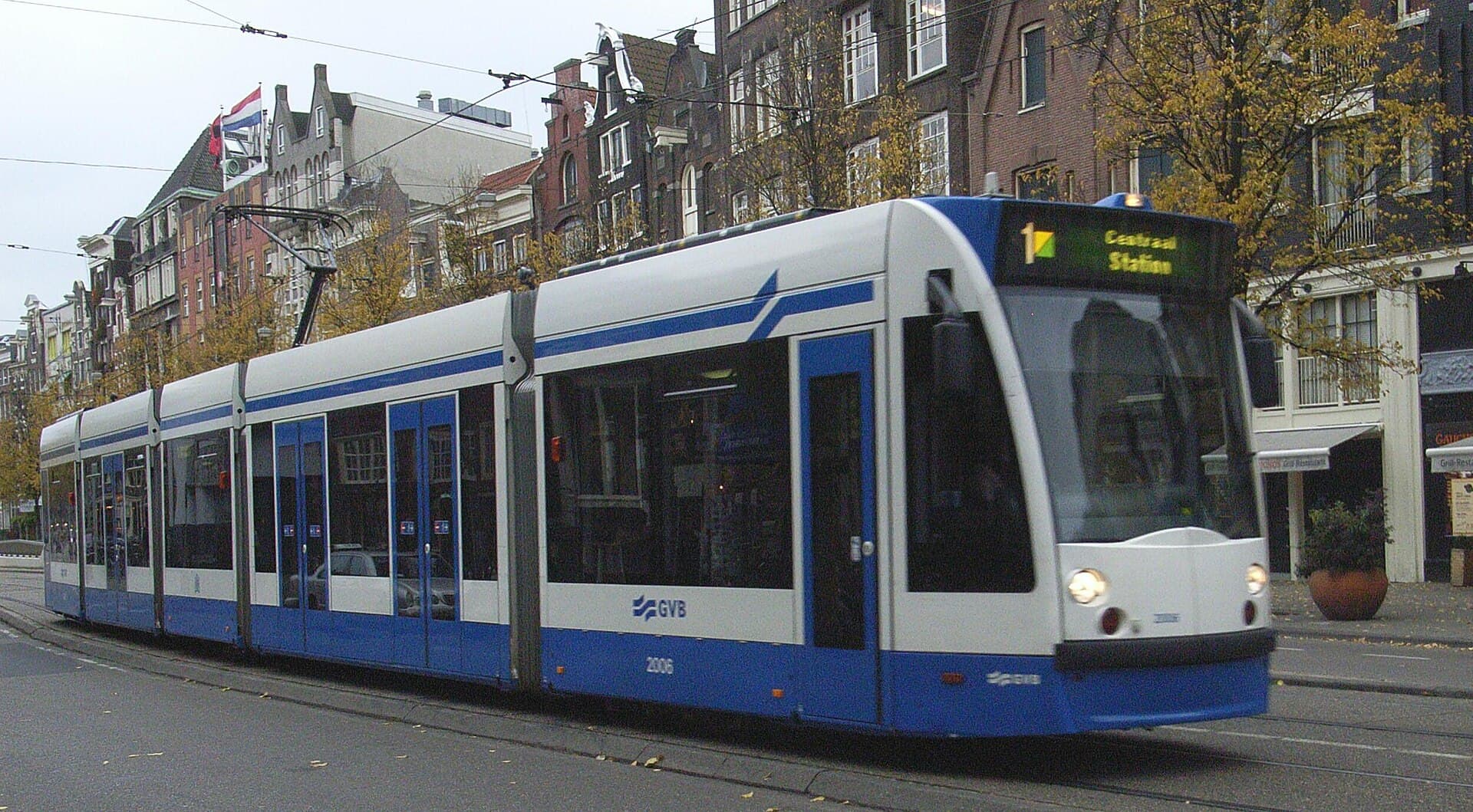
GVB is the city operator: trams, metro, buses, IJ ferries (the ferries are always free). They sell a day pass and multi-day passes from 1 up to 7 days.
Approximate 2026 prices, based on the most recent GVB rate card I could verify:
| Duration | Price (approx) |
|---|---|
| 1 hour single | ~€3.40 |
| 24 hours | ~€9 |
| 48 hours | ~€15 |
| 72 hours | ~€22 |
| 96 hours | ~€28 |
| 168 hours (7 days) | ~€42 |
You can buy them at GVB ticket machines (every metro station and most major tram stops), at the GVB service points at Centraal and Schiphol, or via the GVB app. They tap in and out on the same gates as everything else.
The catch: GVB-only. Doesn't cover the NS train to Schiphol. Doesn't cover any attractions. If your only transport need is the occasional tram, you'll usually pay less with pay-as-you-go OVpay (next section).
For a deeper look at how the system actually works on the day, see getting around Amsterdam by public transport.
OVpay (contactless) - the default for light users
OVpay is the Dutch contactless payment system. You tap your debit or credit card (any Visa, Mastercard, Amex or supported phone wallet) on the reader when you get on, tap again when you get off, and you're charged the equivalent of an OV-chipkaart fare automatically. It works across GVB and NS trains, so the same tap that gets you on a tram also gets you to Schiphol.
The base rate on GVB is roughly €1.08 to board plus around €0.20 per kilometre, so a short central tram ride lands at around €2 and a longer ride at €3-4. The hour ticket on a single ride caps out around €3.40. Critically, GVB applies a daily cap of roughly €9 - tap as much as you like and you won't pay more than the day-pass price.
The catch: you have to actually check out. If you tap in and don't tap out, the system charges you the maximum fare for the route. This is most painful on NS trains, where a forgotten check-out at the other end can cost €20+. Use the OVpay app to spot and correct these.
For visitors staying centrally and only catching a couple of trams a day, OVpay is almost always cheaper than a pass. For the full deep dive on contactless versus the old OV-chipkaart - and what's changing as the old card is phased out - see OV-chipkaart vs OVpay 2026.
Holland Pass - rarely the right call for Amsterdam-only trips
The Holland Pass is a pick-attractions model. You buy a tier (Small, Medium, Large) which gives you a set number of "high-tier" and "low-tier" attraction tokens to spend across the Netherlands - Amsterdam plus Rotterdam, The Hague, Utrecht, Delft, sometimes further.
2026 entry-level pricing tends to start around €55 for a small pass and climb past €120 for the larger versions, depending on the season and the reseller. The pass does not include public transport - the bundled "discount" on train tickets and Hop-on Hop-off bus is a soft coupon, not free travel.
When it wins: a 4-7 day Netherlands trip where you'll do attractions in multiple cities. Then it's a fair convenience product.
When it loses: an Amsterdam-only trip. The City Card's bundle of transport, cruise, bike day and museums is a tighter, cheaper match for the same attractions, with the same set of major exclusions (Anne Frank, Van Gogh) on both. Easy choice if you're not leaving the city.
Museumkaart - mostly for residents
The Museumkaart is the Dutch museum-pass system: a single annual card that lets you into 400+ museums nationwide, including most of Amsterdam's major museums (Rijksmuseum, Stedelijk, Hermitage / H'Art, Resistance Museum, Tropenmuseum, EYE Filmmuseum). The current price is around €85 a year.
For residents: a no-brainer. Two visits pays for it.
For tourists: the maths is fine in principle - five museums and you're ahead - but the friction is real. The personalised version requires a Dutch postal address to register; the temporary tourist version covers 31 days from first activation and is usually bought at the museum desk on first entry. If your trip is genuinely museum-heavy and long enough (a week or more, five museums or more, no need for transport), it can beat the City Card. For most short trips, the City Card is easier and bundles the cruise on top.
Which pass for which trip?
A few honest rules of thumb:
- 1-2 days, sightseeing-focused: I Amsterdam City Card (24 or 48 hour) - the cruise and Rijksmuseum alone get you close to break-even
- 3-5 days, sightseeing-focused: 72- or 120-hour City Card. The 5-day card costs only €25 more than the 3-day
- Arriving by plane, transport-only need: Amsterdam Travel Ticket
- Already in the city, transport-only need: GVB multi-day pass or pay-as-you-go OVpay - OVpay wins if you'll take fewer than four rides a day
- Walking-focused, central hotel: skip every pass; pay per attraction and OVpay the occasional tram
- Long stay, museum-led: Museumkaart
- Multi-city Dutch trip: Holland Pass or just buy attractions individually plus an NS train pass
A final note on the Schiphol train: this is the single most common pass-mismatch I see. Tourists buy the City Card expecting it to cover the airport train, find out at the gate that it doesn't, and end up paying €6 each way on top. If you want one purchase that handles airport-plus-city transport, that's the Travel Ticket. If you want one purchase that handles museums-plus-city transport, that's the City Card. Nothing on this list covers both.
For more on the airport leg itself, see our Schiphol to Amsterdam centre guide. For deciding when to come in the first place, our best time to visit Amsterdam covers the calendar. And if Anne Frank is on your list, start with Anne Frank House tickets 2026 - that's the booking that needs the most lead time, regardless of which pass you choose.
Run your actual day-by-day plan against the inclusions list. The right pass is usually obvious once you do.