If a friend visiting Amsterdam asks me where to eat, I almost always say the same thing: go to De Pijp and walk. This dense grid of streets south of the centre has the city's biggest street market, around 150 nationalities living shoulder to shoulder, and a concentration of small, owner-run restaurants that the tourist centre simply cannot match.
You could eat every meal here for a week and not repeat yourself. Here is how I'd spend the good ones.
Start at the Albert Cuyp market
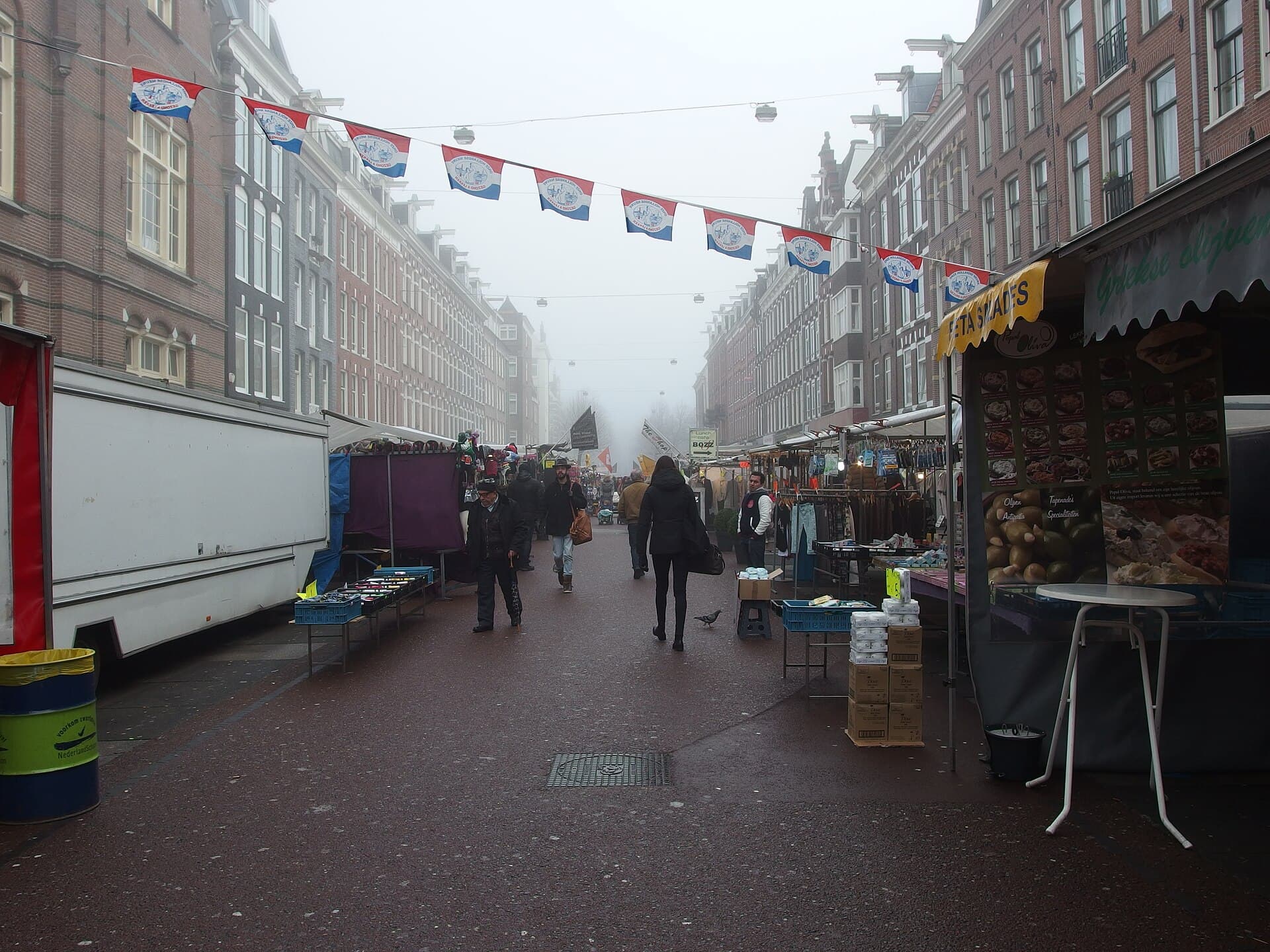
The Albert Cuypmarkt runs the length of Albert Cuypstraat, Monday to Saturday, roughly 9:00 to 17:00. It has been going since 1905 and is the largest day market in the Netherlands.
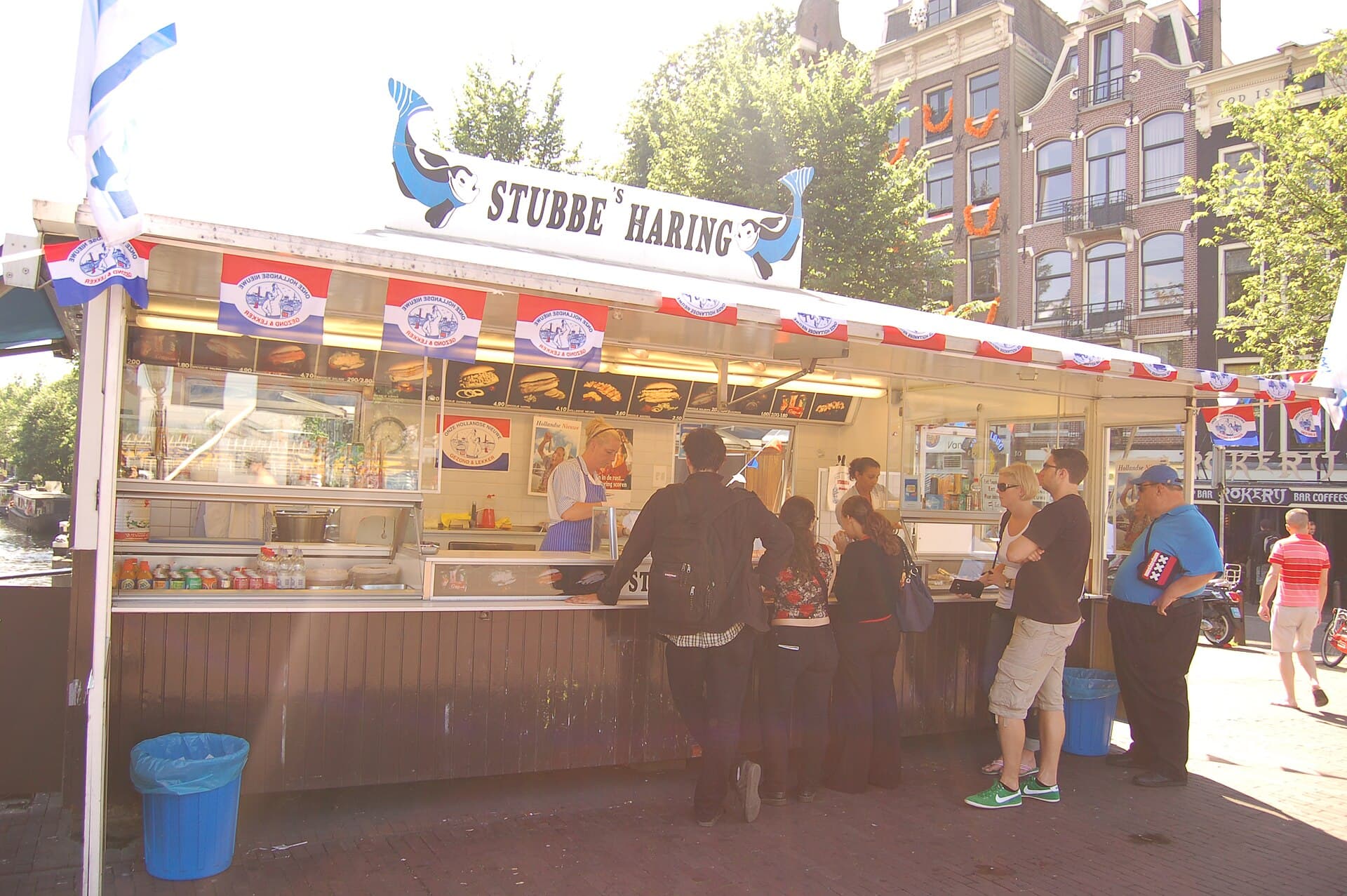
For eating, this is breakfast and snacks more than a sit-down meal. Get a fresh stroopwafel pressed warm off the iron (around 2.50 euros), a cone of kibbeling - battered fried fish with garlic sauce - or a broodje haring from a fish stall for about 3 euros. Bring some cash; the smaller stalls are often cash-only. For more on the Albert Cuyp and the city's other markets, see our guide to Amsterdam's food markets and street food.
Lunch and brunch
De Pijp does daytime eating extremely well.
- Bakers & Roasters - a hugely popular brunch spot with a Brazilian-Kiwi slant. Excellent, but expect a real queue on weekends; go on a weekday or be there at opening.
- Oeuf - a small place doing egg dishes from around the world, open 7 days, roughly 10:00-16:00 weekdays. Easygoing and good value.
- CT Coffee & Coconuts - in a former cinema on Ceintuurbaan, dramatic three-level interior. The space is the draw as much as the food; fine for a long coffee or brunch.
Mains and brunch plates here generally land between 12 and 18 euros.
Dinner: the small independents
This is where De Pijp really earns its reputation. A few I rate honestly:
- Pekelhaaring on Van Woustraat - bright, contemporary Italian with handmade pasta and grilled fish. Reliable, friendly, fair prices for the quality.
- Samuel's - a proper French neighbourhood brasserie with a handsome bistro interior; steak tartare, omelettes, ponzu kingfish.
- NAZKA - bold contemporary Peruvian, with four- and six-course menus. A treat rather than a casual drop-in.
- Sjefietshe - Amsterdam's first dedicated cevicheria, laid-back and good for sharing.
Expect three courses at the bistro-style places to run roughly 35 to 50 euros a head before drinks. Book Thursday to Saturday.
Wine bars and a drink
De Pijp is full of small wine bars where a few plates and a bottle make the whole evening. Paskamer, tucked into a residential corner, was named the country's best wine bar in 2023 and still has knowledgeable staff and a deep list. For something simpler, plenty of cafés along Frans Halsstraat and Gerard Doustraat will happily pour you a glass and a board of cheese.
Cheese, snacks and things to take away
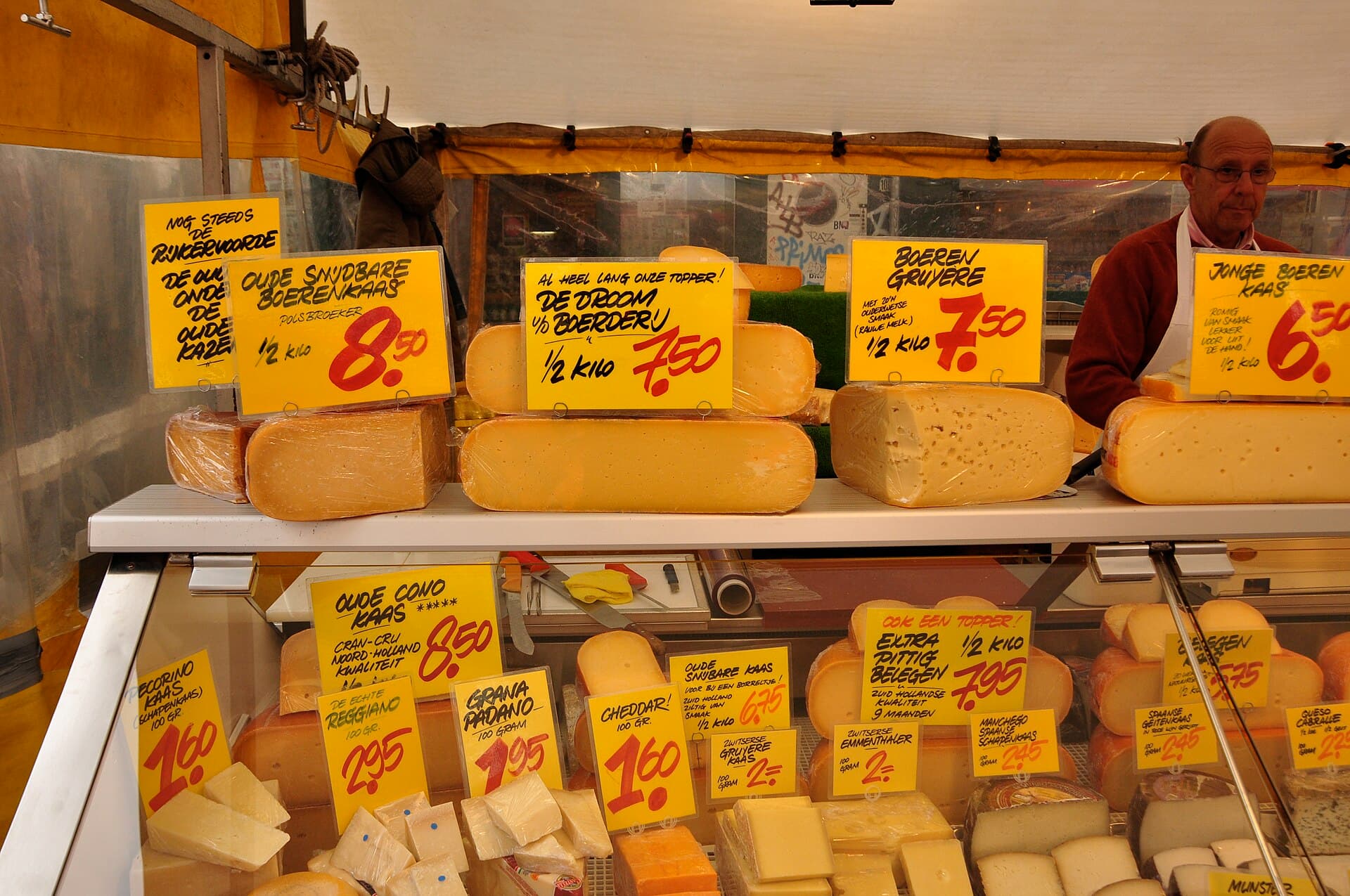
- Kaasbar - a stylish spot built around tasting Dutch cheese, a good intro if you want to actually understand what you are buying
- The market itself for olives, nuts, Surinamese and Turkish takeaway, and a wall of fresh produce
- Surinamese roti and broodje counters around the south end of Albert Cuypstraat - cheap, filling, genuinely good; see our cheap eats guide for more on Surinamese food and other budget options
A practical plan for a day of eating
Brunch mid-morning before the queues, then graze the Albert Cuyp around midday for a stroopwafel and some fish. Coffee and a sit-down in the afternoon, a glass of wine around 18:00, then a booked dinner at one of the small independents. Trams 4, 12 and 24 and the De Pijp metro stop all drop you right in it.
One honest warning: a few places on the busiest market corner trade on footfall rather than cooking. If a menu has photos and a tout outside, walk one street over. The good De Pijp restaurants never need to chase you.
For more local eating across the city, see our guides to Amsterdam's best Indonesian restaurants and rijsttafel and the city's traditional brown cafés.